
 0 Comments

https://casperhd.com/5-experiencias-interesantes-al-corre – At face value, running is an easy thing to do. Laces on the shoes, out the door. But after you get running into your routine, it begins to change so much more than an entry on a scale.
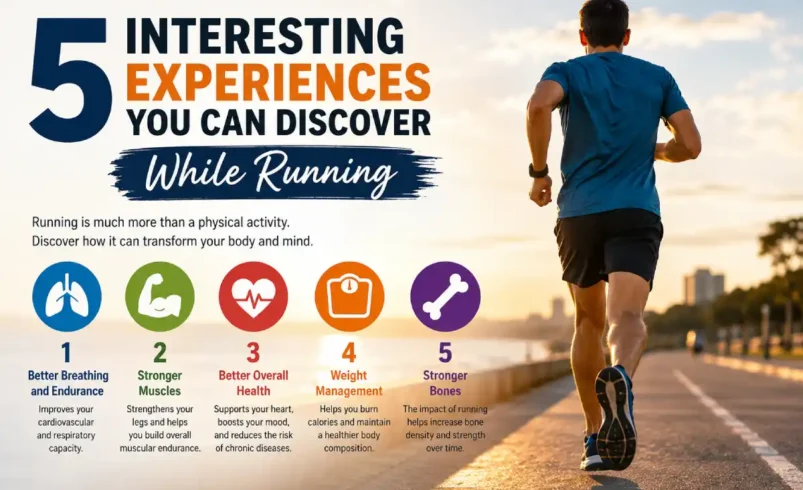
CasperHD’s original article “5 Experiencias interesantes al correr” looks at five key components to running – breathing, muscles, overall health, weight, and bone strength. – We should be careful when listing the effects of running as if they will simply make you immune to disease or help to magically treat existing ailments, though they are all linked to a reduced chance of serious cardiovascular ailments, type 2 diabetes, and certain cancers among other conditions.
Still, that just shows the potential for how one activity can reach out into so many elements of life.
What Does Running Actually Mean?

The aerobic activity of running involves large muscle groups moving repeatedly, and the muscles receive their fuel from the increased need for oxygen by our heart and our lungs. If you compare the movements to an ordinary walking effort, they usually occur for a period when neither foot is in contact with the ground, which increases the load on the muscles, heart, lungs, and joints. We need not necessarily be trained athletes to begin running.
A beginner may first combine effort with periods of walking and gradually build up to longer running sessions.
According to its 2020 recommendations, WHO advice for most adults is that they “should be able to perform 150–300 minutes of moderate-intensity aerobic physical activity or 75–150 minutes of vigorous-intensity aerobic physical activity or an equivalent combination throughout the week,” and engage in muscle-strengthening activities at least 2 times per week.
The most important aspect here is that training and physical effort do not need to start at a higher level immediately; often, a more gradual progression with regular effort may feel more sustainable.
1. Your Breathing System Starts Working Differently
The majority of runners, especially the new ones, discover one thing very quickly: breathe. To operate at their full potential, the muscles used in the act of running require a high dose of energy. In response, the circulatory and respiratory systems work harder, so you breathe faster, your pulse beats faster, and the muscular system increases your oxygen intake capacity by consuming additional oxygen.
After you start taking advantage of cardiorespiratory and the body fitness that comes from consistent exercise training, the cardiovascular system may adapt and change
What Is Cardiorespiratory Fitness?

Cardiorespiratory Fitness: Your body’s capacity for functioning like an efficiently running, aerobic-based ‘motor’ that supplies your active muscles with oxygen & utilizes that oxygen effectively during aerobic, continuous activity.
As your fitness improves, you may notice that:
- You recover faster after running.
- You can run for longer periods.
- Everyday activities feel easier.
- Climbing stairs becomes less tiring.
- You become better at controlling your pace and breathing.
- Your body feels more comfortable during physical effort.
It is worth making one clarification here.
Running does not simply mean that your lungs become dramatically larger. The adaptations involve the entire cardiorespiratory system, including the heart, blood vessels, muscles, and the body’s ability to use oxygen efficiently.
How Should You Breathe While Running?
Beginners often worry about finding a perfect breathing pattern.
In reality, the most useful starting point is to control your running pace.
If you run too quickly, breathing becomes difficult. Slowing down often makes the session much more manageable.
A comfortable pace allows you to build endurance without turning every workout into an exhausting challenge.
2. You Start Discovering Muscles You Didn’t Know You Used
Running may look like a leg exercise, but it actually involves several muscle groups.
The main muscles involved include:
- Glutes
- Quadriceps
- Hamstrings
- Calves
- Core and stabilizing muscles
- Muscles around the feet and ankles
When you run regularly, you may notice that your legs feel stronger and better able to handle physical activity.
What Does Muscle Development Mean?
Muscle growth the mechanism through which muscles adapt to physical demands that are placed upon them.
Running may enhance muscular and functional strength but does not yield the same outcomes as strength training; for example, if an individual hopes to be extremely muscular, they will likely need to undertake a strength training program in addition to their running.
This illustrates how aerobic exercise along with strength training can comprise a fitness plan, as the WHO suggests muscle-strengthening activities that work the major groups of muscles 2 days or more per week
3. Your Overall Health Can Improve
The biggest benefit that running may offer is how physical exertion affects how you feel. A physical workout may not just affect our legs; it may also transform how we rest, how we feel, and the body’s overall functioning.
It will affect the body’s systems, sleep cycles, functioning, and metabolic functions, as well as mood and cardiovascular processes.
Those who engage in regular physical activity are less likely to develop certain disease types, such as type 2 diabetes, Cardiovascular and stroke ailments.
Running and Cardiovascular Health
Your heart works more when you run. With continued effort to become fitter, your heart’s capacity gradually increases, making it better prepared for exertion and longer durations. However, they do not recommend it be overstated.
Running will not help medical conditions. Patients suffering from heart failure, cardiovascular disease, heart, or other medical conditions should get a custom exercise prescription by a doctor of sports medicine.
Running and Mental Well-Being
There is also a psychological side to running.
Sometimes the best part of a run is not the distance shown on your smartwatch. It is the feeling you have afterward.
Physical activity can help reduce feelings of anxiety, support better sleep, and contribute to general psychological well-being.
A quiet run can also provide an opportunity to step away from screens, work, traffic, and everyday responsibilities.
For some people, those 20 or 30 minutes become valuable personal time.
4. Running Can Help With Weight Management
The relationship between running and weight loss is often presented too simply.
Running uses energy, but body weight is influenced by many factors, including:
- Food intake
- Daily physical activity
- Metabolism
- Sleep
- Genetics
- Body composition
- Exercise intensity
- Overall lifestyle
So, running can support weight management, but it does not automatically guarantee weight loss.
What Is an Energy Deficit?
An energy deficit occurs when the body uses more energy than it receives from food and beverages over time.
Physical activity can contribute to creating that deficit.
However, eating patterns remain important.
This is why a sustainable approach is usually more useful than trying to burn as many calories as possible during every workout.
Instead of thinking only:
“How many calories did I burn?”
it can be more helpful to think:
“Am I becoming more active and building healthier habits?”
That change in perspective can make exercise feel much less stressful.
How Many Calories Does Running Burn?
There is no universal answer.
Energy expenditure depends on several factors, including:
- Body weight
- Running speed
- Distance
- Duration
- Terrain
- Fitness level
- Running efficiency
Two people can run the same distance and burn different amounts of energy.
Therefore, calorie figures shown by watches, phones, and fitness apps should generally be treated as estimates rather than exact measurements.
5. Your Bones Receive Important Stimuli Too
Bone health is another interesting part of running that is easy to overlook.
Running is a weight-bearing activity. The repeated loading created by movement provides mechanical stimulation to the skeletal system.
Regular physical activity is associated with better bone health and strength.
What Is Bone Mineral Density?
Bone mineral density, or BMD for short, is the measure of the amount of mineral content in the bone.
It is one of the measurements used to assess bone strength and fracture risk.
Bones are not completely static structures. They continually undergo a process of breakdown and rebuilding called bone remodeling.
Physical activity can influence this process.
Running, however, should not be looked upon as an entire workout for a strong skeleton. Resistance training and other weight-bearing activities can be very beneficial.
The same principle of progression applies as running in general. Overdoing it by adding too much mileage or intensity too quickly will increase risk factors for overuse injury.
Comparison of the 5 Interesting Running Experiences
| Experience | Main Benefit | What You May Notice | Useful Complement |
| Breathing and endurance | Better cardiorespiratory fitness | Less fatigue during activity | Walking, cycling, swimming |
| Muscle development | Improved muscular endurance | Stronger, more capable legs | Strength training |
| General health | Cardiovascular and metabolic benefits | Better energy and recovery | Balanced physical activity |
| Weight management | Increased energy expenditure | Changes in weight or body composition | Healthy eating and strength training |
| Bone health | Weight-bearing stimulation | Better physical capacity | Strength and appropriate impact exercise |
What Happens When You Start Running for the First Time?
Your first week of running may not feel anything like you imagined.
A few minutes can feel surprisingly difficult.
Your breathing may become heavy. Your legs may feel tired. You may wonder how experienced runners manage to continue for so long.
That is completely normal.
Your body is adapting to a new physical demand.
A beginner does not need to start with a long-distance run.
One practical approach is to alternate walking and jogging.
For example:
- Walk for several minutes.
- Jog gently for a short period.
- Return to walking.
- Repeat the process.
As your fitness improves over the coming days you can then increase time to run a little more slowly. There should be no test to see how long you can put yourself on the first day!!
The goal is to create something you can continue doing next week.
Running Faster Does Not Always Mean Running Better
There is a common misconception among beginners that a faster run automatically means a better workout.
That is not necessarily true.
Running too fast can make the workout unnecessarily difficult and may leave you so tired that you struggle to train again.
A sustainable running routine can include different types of sessions:
- Easy runs
- Recovery sessions
- Longer, comfortable runs
- Occasional faster workouts
- Walking
- Strength training
Recovery is not wasted time.
It is part of training.
It does take some time for your body to make adjustments when it experiences physical demands, especially after an increase in activity.
How Much Should You Run to Get Benefits?
There’s no one-size-fits-all mileage.
Globally, the recommendations on physical activity emphasize the total amount of time and intensity needed, instead of any specific running distance that everyone should achieve.
“According to current recommendations for adults: You should get 150 to 300 minutes of moderate intensity or 75 to 150 minutes of vigorous intensity physical activity, plus muscle-strengthening activities 2 times a week. That doesn’t mean you need to be out running a race every day of the week. Your ideal week of exercise can combine many different fitness levels. A mix looks like:
| Day | Activity |
| Monday | Easy run |
| Tuesday | Strength training |
| Wednesday | Walking or rest |
| Thursday | Easy run |
| Friday | Strength training |
| Saturday | Run or recreational activity |
| Sunday | Recovery |
This is only an example.
The best schedule depends on your current fitness level, age, goals, health, and previous exercise experience.
Common Mistakes People Make When Starting Running
Starting Too Fast
The excitement of starting something new often means that novice runners will go further and run faster than their body is able to handle, even if the heart and blood system adapts somewhat faster; then muscles, joints, and tendons still have a long way to go. This explains the gradual progression that will slowly be adapted.
Ignoring Recovery
Daily workouts are not necessarily good workouts. The body must recover from exercise. Some runners find “the more recovery days you rest, the greater your next run works!
Focusing Only on Calories
If every run becomes a calculation of calories burned, exercise can quickly become frustrating.
Running has other benefits.
Better stamina, a deep sleep, boosted self-confidence and a strong physical form – they all count!
Skipping Strength Training
While exercise of all kinds can build different physical abilities, not all of your muscles get trained from just running alone. By incorporating some strength work, you can ensure you are taking care of your whole body in this holistic workout. Try basic exercises like squats, lunges, calf lifts, and any core exercises.
Comparing Yourself With Other Runners
Running apps and smartwatches make comparison incredibly easy.
You can see someone else’s pace, distance, heart rate, or weekly mileage.
But every body is different.
Someone else’s five-kilometer pace tells you very little about your own progress.
A better comparison is with your previous self.
How to Make Running More Enjoyable
It’s much easier to keep running when it doesn’t feel like you are being punished. You can change routes, listen to music or a podcast, run with someone, or just use the time to get away from everything else. Changing your surroundings may also help.
A different route, a park with trees, a nature trail–all of these can feel far less monotonous than a treadmill.
Appropriate shoes help, but one of the most helpful habits is to slow down. A 20-minute jog you can realistically do every day is more helpful than a brutal workout once in a while that leaves you dragging for three days.
The 5 Running Experiences in Simple Terms
If everything above had to be reduced to one idea, it would be this:
Running is a process of adaptation, not a test you have to pass on your first day.
The five major experiences can be summarized as follows:
1. Better Breathing and Endurance
Your cardiorespiratory system adapts as you regularly challenge it.
2. Stronger and More Capable Legs
Running places repeated demands on your lower-body muscles and can improve muscular endurance.
3. Better Overall Health
Regular physical activity can support cardiovascular health, metabolic health, sleep, and psychological well-being.
4. Support for Weight Management
Running increases energy expenditure and can contribute to weight management when combined with appropriate nutrition and other healthy habits.
5. Support for Bone Health
Weight-bearing exercise provides mechanical stimulation that can contribute to maintaining healthy bones.
Final Thoughts
The 5 interesting experiences you can discover while running show why this simple form of exercise continues to attract people around the world.
You do not need to become a marathon runner to experience its benefits.
You do not need to run extremely fast.
And you certainly do not need to measure your success only by distance or calories.
Also Read: https://www.thebusinesscart.com