
 0 Comments

white hair: While gray hair and white hair have long been accepted as an irreversible aspect of aging, they don’t have to appear only after many decades of living. Some people first notice gray or white hairs in their 20s or 30s, while others retain naturally dark colored hair until much later in life. Your age may play a role, along with your genes, lifestyle, diet, or even your overall health.
Seeing the first few white hairs appear often surprises most people. It is easy to attribute the problem to excessive stress or the consumption of a specific food; however, the explanation for hair turning white is much more complex than that. Knowing the reasons behind this particular process may help you decide to pamper it more easily.
What Is White Hair?
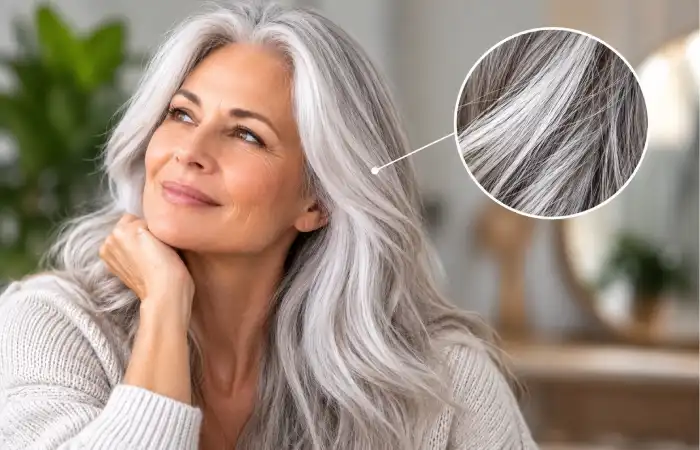
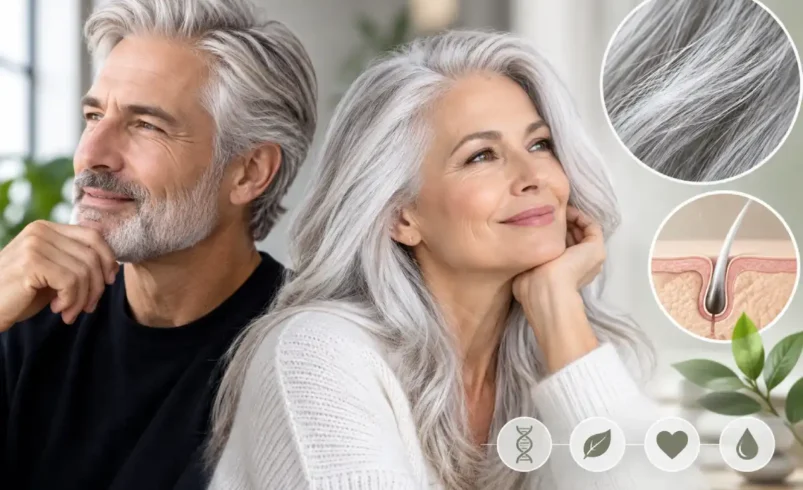
White hair refers to hair that lacks melanin, the natural pigment that gives hair its color. Less productive melanin-producing cells can lead to hair growing out grey, silver, or white. Hair is unlikely to become entirely white overnight from root to tip.
Each strand grows from a root and depends on the pigments produced within the root during growth to determine its color; changes within the root after that point affect future growth, not current.
Mixed with pigmented strands, gray hair usually consists of white hair that is either pale or white.
Why Does Hair Turn White?
Aging is the common factor that makes white hair develop. Pigment-producing cells called melanocytes exist in hair follicles. As people age, melanocytes begin to produce less melanin. Some follicles will then produce extremely small amounts of pigment, and hair from these follicles will thus grow white or gray.
Genetics may contribute to the production of white hair. If close relatives have lost their hair and it has turned white, other family members are also susceptible to growing white hair. This may be a reason that there are people of the same age having different degrees of whiteness.
Common Factors Behind White Hair
Several factors can contribute to changes in hair pigmentation:
- Age: Melanin production naturally declines over time.
- Genetics: Family history can strongly influence when graying begins.
- Nutritional deficiencies: Certain deficiencies, particularly involving vitamin B12, can be associated with premature graying.
- Smoking: Research has associated smoking with earlier hair graying.
- Certain medical conditions, including some autoimmune conditions, can affect pigmentation.
- Oxidative stress: Damage associated with free radicals may play a role in the aging of hair follicles.
- Stress: Severe or prolonged stress may influence hair pigmentation in some circumstances, although it is not accurate to say that ordinary daily stress automatically turns hair white.
White Hair vs. Gray Hair
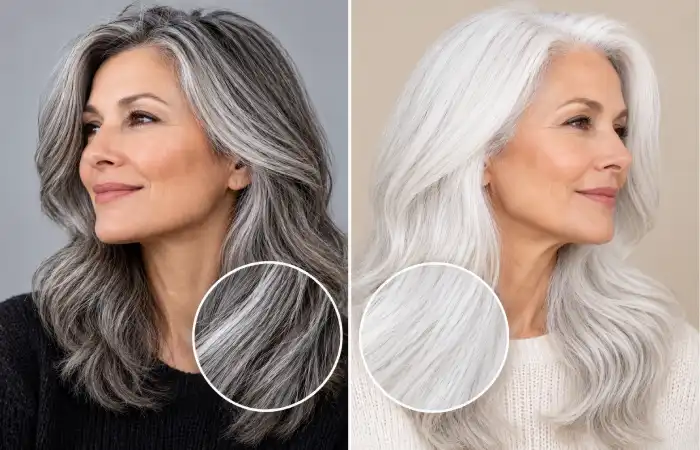
Gray hair and white hair can be used to describe strands that have become colorless. This is, however, not entirely true. Grey hair describes a hair strand that has an element but diminished volume, while white hair has no melanin or minimal traces.
| Feature | Gray Hair | White Hair |
| Melanin | Reduced amount | Very little or none |
| Appearance | Gray or silver | White |
| Common cause | Aging and reduced pigment production | Further loss of pigment |
| Hair texture | May feel different from pigmented hair | Can appear coarser or drier |
| Is it normal? | Usually yes | Usually yes |
Is White Hair a Sign of Poor Health?
Usually, white hair is not a sign of a disease or health concern. Most of us will notice our hair turning white as we get older.
Nevertheless, unusual rapid hair whitening should be carefully evaluated when accompanied by other signs of illness. Nutritional problems and certain diseases (such as thyroid disorders and autoimmune diseases) can sometimes influence hair pigmentation.
People experiencing rapid, early-onset graying who do not have a family history of early graying are advised to discuss this with a doctor to determine whether any screening tests of the alimentary system and other factors are needed.
Can Stress Cause White Hair?
It’s a long-standing claim that stress causes white hair, but, like most things, the truth is slightly less straightforward. It has been found that severe stress can affect hair follicle biology and, in some cases, cause hair loss. Yet, the idea of a traumatic night spent making the whole of your head go white is not as true as has been thought.
New hair doesn’t normally spontaneously turn white due to emotional trauma, but changes in the follicle will cause new hair to grow white instead.
Genetics and normal aging are much more important factors.
Can White Hair Be Prevented?
There is no magic method to avoid the white hair associated with aging. Once the color-producing cells naturally stop producing pigment, average shampoos or oils (or even home treatments) are unreliable for restoring the hair’s natural color.
It is, however, beneficial to maintain good overall health, as this would aid healthy hair growth. Eating a balanced diet rich in protein, minerals, vitamins, and whole foods such as fruits and vegetables is good practice. Avoidance of smoking and any unnecessary damage to hair or hair Follicles is recommended.
If a dietary deficiency has caused premature grey hair, correcting it might help prevent further hair problems. However, do not add supplements unnecessarily; rather, seek testing to confirm this.
Does Plucking White Hair Cause More White Hair?
No. Plucking one white strand does not cause nearby hairs to become white.
Each hair grows from its own follicle. Removing a white hair may cause another hair to grow from that same follicle, but it does not turn surrounding follicles white.
Repeatedly pulling out hairs can, however, irritate or damage the follicle. For someone who dislikes a visible white strand, trimming it close to the scalp is generally a gentler option than repeatedly plucking it.
How Can White Hair Be Cared For?
White/gray hair may sometimes feel different from naturally pigmented hair. Users describe a new texture, a feeling of dryness, roughness, and frizz. White hair is not unhealthy; the follicle simply ages like the rest of the body.
A simple hair-care routine can help:
- Use a gentle shampoo rather than washing excessively.
- Condition regularly to reduce dryness and improve manageability.
- Limit excessive heat styling, especially at very high temperatures.
- Protect hair from prolonged sun exposure when appropriate.
- Avoid harsh chemical treatments if the hair is already dry or fragile.
- Trim damaged ends to keep the hairstyle looking neat.
- Maintain a balanced diet rather than relying on unproven hair supplements.
For people who want to hide white hair, coloring remains the most reliable cosmetic option. Temporary color products, semi-permanent dyes, and permanent hair colors offer different levels of coverage.
Natural White Hair Can Look Beautiful
Your natural white hair doesn’t have to be concealed. As more and more people choose to go natural and “natural white hair”, silver, gray, and white hair are really the in thing. For me, what really looks good on white hair is well-maintained hair rather than a color, a beautiful set of white hair can actually look trendy, individual and chic. And for some, it also costs little and takes little time, since there’s no need for frequent coloring—and it’s really a decent decision to want colored hair, too.
Final Thoughts
Hair usually turns white when melanin production in hair follicles slows. The primary culprits, of course, are aging and your DNA; your diet, smoking habits, disease, and potentially excessive stress all play a role in when silver begins to appear.
There is no “correct age” for white hair to show up; a person might sport a few silver hairs while still in his or her early twenties, while another may not appear overly gray until he or she has celebrated quite a few birthdays.